


Moving to Knoxville? Start With the Bigger Picture.
Finding the right home is only part of the move. The better starting point is understanding how Knoxville’s areas, commute patterns, housing options and everyday lifestyle fit together.

Before You Pick an Area, Decide What Matters Most
Most relocation decisions come down to a handful of tradeoffs. Get clear on these first and the list of areas worth touring gets much shorter.
Commute
Where do you need to be regularly — Downtown, UT, ORNL, West Knoxville, the airport? Check the drive at the times you’d actually make it.
Budget
The same price can buy very different homes in different parts of the area — in size, age, lot and condition.
Home Style
Newer construction, established neighborhoods, condos, larger lots, single-level homes or historic properties.
Lifestyle
Walkability, suburban convenience, quieter surroundings, lake access, trails, or being near restaurants and events.
Space
Lot size, bedrooms, a home office, guest space or room for multigenerational living.
Long-Term Plans
Think past year one: resale, possible job changes, family plans and how much upkeep you want.
Knoxville Isn’t One Market
The Knoxville area is a collection of distinct pockets, each with its own housing mix and pace. Here’s a quick orientation — a starting point, not a verdict.
West Knoxville / Bearden / West Hills
Established neighborhoods mixed with newer infill, close to the Kingston Pike corridor. Often considered for its central-west location and everyday convenience.
Farragut
Its own town, largely made up of planned subdivisions, many with HOAs. Often considered by buyers who want a suburban layout on the west side.
Hardin Valley
Much of the housing here is newer construction in larger subdivisions. Often considered for newer homes with access toward West Knoxville and Oak Ridge.
Karns
A mix of older homes, some on larger lots, and newer subdivisions. Often considered by buyers balancing space and price on the northwest side.
Powell / Halls
Established and newer subdivisions, with more rural edges farther out. Often considered for more room and a slightly slower pace north of the city.
North Knoxville
Historic homes near downtown and established neighborhoods like Fountain City. Often considered for character, older homes and proximity to the city.
Downtown / Old City
Mostly condos, lofts and townhomes, with restaurants and events within walking distance. Often considered by buyers who want an urban routine.
South Knoxville
Older homes, hillside lots and newer infill, close to trails and green space along the river. Often considered for outdoor access near downtown.
Oak Ridge
Its own city, home to Oak Ridge National Laboratory, with many mid-century homes alongside newer ones. Often considered by people working in the area.
Maryville / Alcoa
Two established towns near the airport and the foothills. Often considered for their own small-city feel and access toward the mountains.
Lenoir City & lake areas
Lake-oriented communities along Fort Loudoun and Tellico lakes, alongside in-town neighborhoods. Often considered by buyers who want to be near the water.
These are broad strokes. Every area has streets, price points and home types that break the pattern — which is why touring with a plan matters.
A Better Way to Narrow It Down
Instead of starting with a neighborhood name, start with what you want your days to look like. Here’s how I’d think through a few common starting points.
“I want newer homes and more space.”
What I’d weigh with you:
- Where newer subdivisions are concentrated versus established areas with updated homes
- HOA rules and dues, and what they actually cover
- How much extra commute you’ll trade for square footage
- Resale when many nearby homes look similar
Usually leads to a short list of areas worth touring — not one answer.
“I want to be closer to downtown.”
What I’d weigh with you:
- Condo or townhome versus an older single-family home
- Parking, noise and HOA details that matter in denser areas
- Condition and update history of older homes
- Which walkable spots you’d really use week to week
Usually leads to a short list of areas worth touring — not one answer.
“I want something quieter with a little more room.”
What I’d weigh with you:
- Lot size, slope and how usable the land really is
- Public utilities versus well and septic
- Drive time to groceries, work and everyday errands
- Internet options and how much upkeep you want
Usually leads to a short list of areas worth touring — not one answer.
“I want to simplify and avoid a lot of stairs.”
What I’d weigh with you:
- True single-level living versus a main-level primary suite
- Step-free entries, garage access and hallway widths
- Condos or villas where exterior upkeep is handled
- Proximity to healthcare, errands and family
Downsizing too? The Right-Sizing Roadmap walks through timing.
Buying From Out of Town Is Different
The goal is to make your time in Knoxville count.
- Narrow areas before you book a trip so tour days focus on homes that actually fit.
- Use virtual showings to rule homes in or out before you fly in.
- Understand condition remotely through detailed video, disclosures and inspection planning.
- Line up lender, inspection and closing timelines around your move date.
- Test the commute and daily errands, not just the house.
- Avoid a wasted weekend of touring homes that were never going to work.
Start Exploring Knoxville Homes
Search broadly first. Once we know what matters most, we can narrow the search by area, home style, budget and everyday needs.
Living Here Is More Than the House
Market notes, seasonal finds and the everyday places that make an area feel like home.
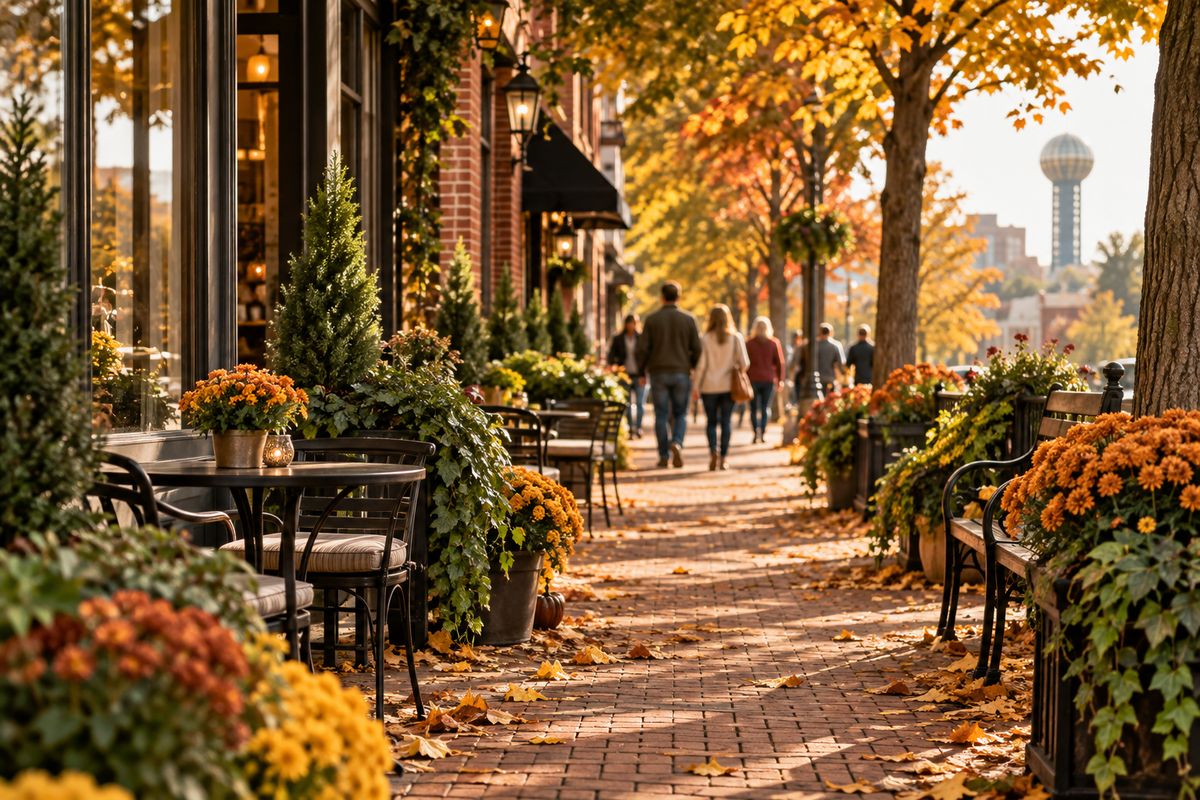 Seasonal
Fall Around Knoxville
Places, events and local stops worth having on your radar this season.
Follow along on Instagram → Outdoors
Getting Outside
Riverfront walks, trails and green space — often a bigger factor in choosing an area than people expect.
Follow along on Instagram → Market
Knoxville Market Report
What prices, inventory and timing looked like at mid-year.
Read the report →You Don’t Need to Know Knoxville Yet
That’s part of what I’m here for.
My job is to help you understand the tradeoffs between areas, homes and price points so you can make a move that fits more than just a search filter.
- 1Talk through the moveTiming, work, budget and what you want daily life to look like.
- 2Narrow the areasA short list of places worth your time, with the tradeoffs spelled out.
- 3Build the home searchNew listings sent as they hit, refined as you react to them.
- 4Tour in person or virtuallyFocused tour days, plus video walk-throughs when you can’t be here.
- 5Make and manage the moveOffer, inspections and closing coordinated around your move date.
Planning a Move to Knoxville? Let’s Talk It Through.
You don’t need to have an area picked out or a perfect timeline. Start with what you know, and we can work from there.
Wallace Real Estate, Bearden Office· (865) 584-4000· 140 Major Reynolds Place, Knoxville, TN 37919
BEARDEN OFFICE
(865) 584-4000
info@wallacetn.com
140 Major Reynolds Place
Knoxville, TN 37919
DOWNTOWN OFFICE
865-342-1111
info@wallacetn.com
625 S. Gay Street #205
Knoxville, TN 37902
FARRAGUT OFFICE
865-966-1111
info@wallacetn.com
10815 Kingston Pike
Knoxville, TN 37934
LAKESIDE OFFICE
865-342-4200
info@wallacetn.com
9420 Northshore Drive, Suite 101
Knoxville, TN 37922
NORTH OFFICE
865-687-1111
info@wallacetn.com
3009 Tazewell Pike
Knoxville, TN 37918
NORTHSHORE & PROPERTY MANAGEMENT OFFICE
865-584-4700
info@wallacetn.com
813 S. Northshore Drive, Suite 101
Knoxville, TN 37919
UPPER CUMBERLAND
931-404-1111
info@wallacetn.com
80 Miller Avenue #104
Crossville, TN 38555
WEST OFFICE
865-693-1111
info@wallacetn.com
106 N. Peters Road
Knoxville, TN 37923





©2025 Wallace Real Estate. All Rights Reserved. Not intended as a solicitation if your property is already listed by another broker. Affiliated real estate agents are independent contractor sales associates, not employees. Wallace fully supports the principles of the Fair Housing Act and the Equal Opportunity Act.
